How to Format Content for AI Citations When Google Says Don't

Danny Sullivan, Google's Search Liaison, went on a podcast and told you to stop cutting your content into chunks for AI. The systems that decide whether your page shows up inside an AI answer still read it one passage at a time. Both things are true. You format content for AI citations by writing clear sections whose answers stand alone, which serves a skimming human and a passage-scoring machine with the same edit and no rebuild.
Which page type to publish, and why the click is shrinking, is a separate question that I answer in which page types AI engines actually quote. This page is about structuring the page itself.
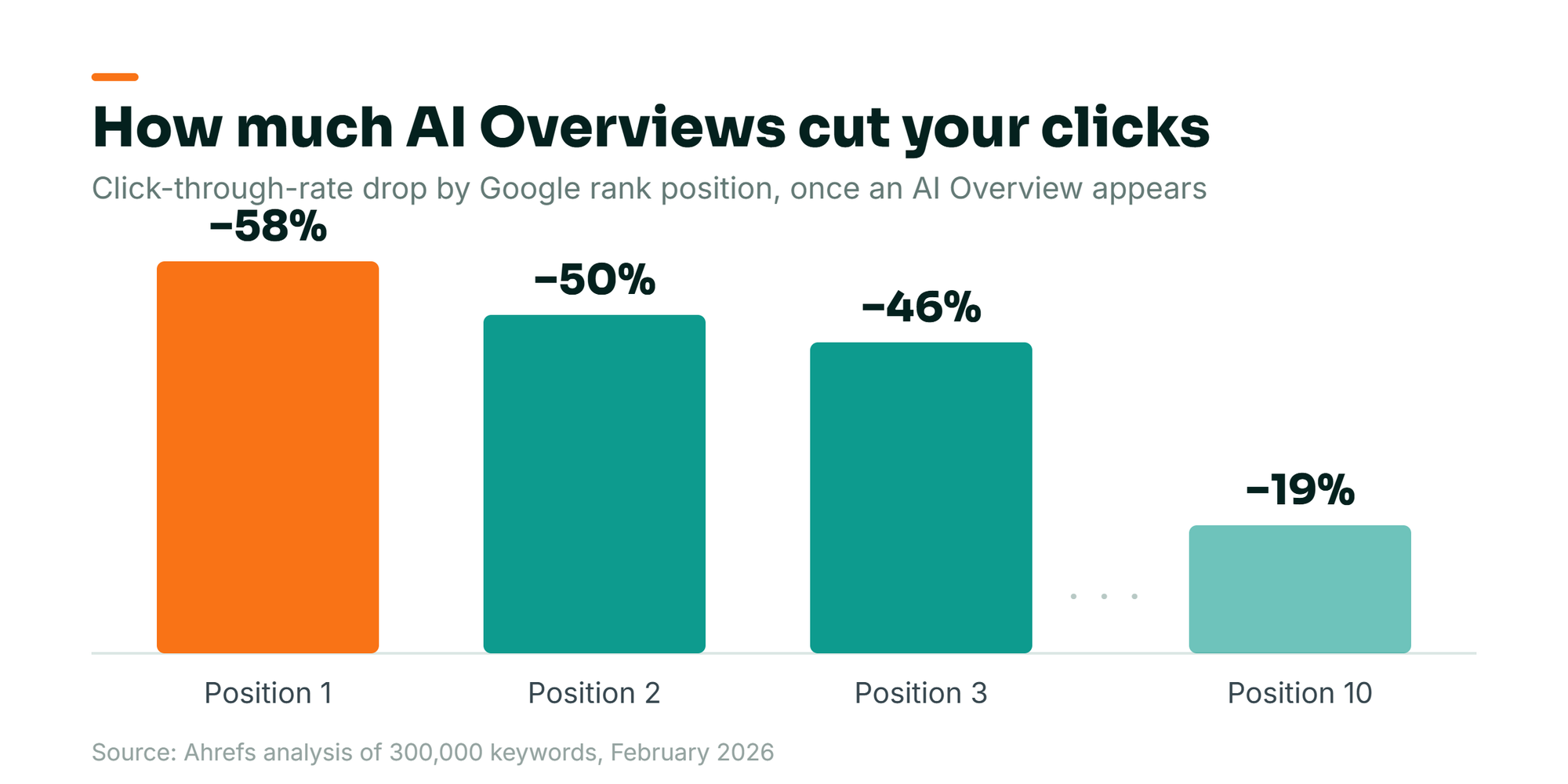
Ahrefs analyzed 300,000 keywords and found an AI Overview cut the clickthrough rate of the top-ranking page by about 58% in December 2025, per Ryan Law's February 4 2026 report. Being quoted inside the answer is what is left to win.
What Danny Sullivan actually said about chunking content
A roofer in Tampa reads that Google's own liaison says don't format for AI, exhales, and tells his marketing person to stop fussing over headings and "just write good content." Reasonable on its face. He trusts the source, and Google said it. What he actually did was remove the structure that lets a machine lift a clean answer about flat-roof repair costs out of his page and put his name next to it.
The confusion is real because the advice arrived with authority. The quote that launched a thousand bad decisions comes from the Search Off the Record podcast, quoted by Mike King at iPullRank on January 15 2026:
"One of the things I keep seeing over and over... is that turn your content into bite-sized chunks, because LLMs like things that are really bite size, right? So we don't want you to do that. I was talking to some engineers about that. We don't want you to do that. We really don't. We don't want people to have to be crafting anything for Search specifically."
Danny Sullivan, Google Search Liaison, Search Off the Record podcast, via iPullRank, January 15 2026.
Read it twice and you notice what he is objecting to: crafting content "for Search specifically." Gaming. Writing for the machine and forgetting the person. He objects to robot food. Structure is a different thing. Owners collapsed "don't write artificially for AI" into "don't organize your thinking." The first instruction protects your reader. The second abandons them.
This is the third time I have watched a "stop optimizing, just write" message get weaponized into an excuse to publish unstructured mush. In seventeen years the pattern never changes. A platform says something sensible about not gaming the system, and a swath of businesses hear permission to stop thinking about how anyone, human or machine, will find the answer inside their work.
Why AI systems still read your page one passage at a time
Sullivan's intent and the machine's mechanics are two different layers, and only one of them decides whether you get cited. Mike King put the resolution plainly in that same January 15 2026 iPullRank piece:
"Chunking and creating content for users are not mutually exclusive."
Mike King, iPullRank, January 15 2026.
He goes further in the same piece:
"In every one of these systems, passages remain the atomic unit of meaning."
Mike King, iPullRank, January 15 2026.
Atomic unit means the smallest piece the system works with. Retrieval systems behind AI answers do not grade your whole page as one block. They break it into passages, score each one against the question, and pull the passage that answers best. A page that buries its answer to "how much does flat-roof repair cost in Tampa" inside paragraph nine of an unbroken essay is a page where the strongest passage is hard to isolate. Clear sections with self-contained answers are easier to lift, and a human skimming on a phone wanted them anyway.
The two audiences want the same thing. A business owner scanning your page between meetings and a retrieval system scoring passages both reward a section whose meaning survives being read alone. I have written that getting cited is precise SEO. You are doing the old skill with more discipline.
How to format a page so AI can quote it
This is editing discipline applied to pages you already have. Start with the ten that matter most to revenue.
Give every section a heading that makes a claim or asks the reader's question
A heading that says "Pricing" names a topic. "[Your service] in [your city] costs [your real price range]" or "How much does [your service] cost in [your city]?" tells the reader and the machine where the answer is. A reader skimming your headings should get your whole argument, and a retrieval system reads those headings as signposts. Do this yourself in twenty minutes per page.
Answer the heading's question in the first two sentences
Open each section with the payoff, then give the context, the caveats and the story. The buried answer is the citation you lose. A human gets what they came for fast, and a machine finds a clean, self-contained passage to quote.
Write every factual claim as a sentence that stands alone
"It costs more in winter" means very little once it is lifted out of context. "[Your service] costs [your real percentage] more in [season] because [the real reason]" survives on its own in an AI answer with your name attached. Every number, every price and every specific gets the full sentence around it. This is the single highest-impact edit, and it costs only attention.
Put the thing only you have on the page
Your real pricing, your job-site photos with specifics, your warranty terms, your actual case numbers: the things you have because you do the work. State each one plainly in its own section. Cyrus Shepard's Zyppy study of 400-plus sites, published April 9 2026, found 92.9% of the sites gaining Google traffic owned proprietary assets, against 57% of the losers. A generic page restating what ten competitors already said gives a machine no reason to pick you. For how engines filter content before they ever cite it, the stages AI search runs content through before quoting it are worth walking once.
Skip anything written for a parser
This is the part Sullivan got right. No keyword-stuffed FAQ blocks written for a parser, no fake question headings a customer would never type, no padding to hit a word count. Clear structure and natural language are the same edit done well. If a sentence would embarrass you read aloud to the roofer's customer, it will not help you with the machine either.
Hand this table to whoever edits your pages.
| The edit | What to ask your writer or agency |
|---|---|
| Claim or question headings | Does every H2 and H3 make a specific claim or ask a question a customer would type? |
| The answer in the first two sentences | Does the first sentence of each section answer the heading’s question without the rest of the page? |
| Facts that stand alone | Does every price, number and claim on this page still make sense if it is the only sentence someone reads? |
| The thing only you have | What can we say on this page that no competitor can copy, and is it in its own quotable section? |
| Skip anything written for a parser | Would any heading, FAQ or paragraph on this page embarrass us if we read it aloud to a customer? |
Where formatting stops
By September 1 my own site had 115 posts with answers up front, a question-led FAQ and matching FAQPage schema on each, a named author box and a PageSpeed score of 100. Its domain rating is 0. In the 90 days to September 1 it drew 1,230 impressions and 17 clicks in Google Search Console.
Structure makes a page quotable. A third-party record decides whether an engine trusts the page enough to quote it, and this site has not built one. My guide to answer engine optimization covers that trust work and the order it goes in.
How to tell whether the formatting worked
Structure will not turn your organic traffic graph back up. Scoring content by Google traffic alone grades the wrong test. When an AI answer cites you, check whether it repeats your specific number or a competitor's. A vague line lifted from your page does little for your brand. The citation worth winning quotes the thing only you could say. The full monthly routine, AI referral traffic included, is in my post on which page types AI engines quote.
Structure is one part of a much bigger job, and I cover where it fits in my guide to AI search visibility.
Frequently Asked Questions
Did Google actually tell people not to format content for AI?
Yes, sort of, and the wording matters. On the Search Off the Record podcast, quoted by Mike King at iPullRank on January 15 2026, Danny Sullivan said Google does not want people turning content into bite-sized chunks. He also said Google does not want anyone "crafting anything for Search specifically." Read closely, he is objecting to writing artificially for the machine. Organizing your content with clear sections and headings is a different thing, and owners keep collapsing the two into one.
If I structure my content clearly, will my Google traffic come back?
No, and anyone promising that is selling you something. Clear structure makes your pages quotable inside AI answers. That protects your brand visibility and feeds assisted conversions. It does not bring back the click volume of five years ago.
What is the single most important change to make first?
Rewrite your factual claims as complete, standalone sentences on your ten highest-revenue pages. A sentence like "it costs more in winter" cannot be lifted into an AI answer with your name attached. "[Your service] costs [your real percentage] more in [season] because [the real reason]" can. Every price, number and specific claim should survive being read alone.
You spent years learning that ranking first was the prize. It still helps. The new prize is being one of the passages an AI answer quotes, and that depends on whether your best answer stands alone when a machine pulls it out. Every system that cites you has read your page one paragraph at a time all along. Sullivan's advice does not change how they read.