AI Visibility: The Complete Guide for Business Owners

Your customers are starting to ask a question and just take the answer the machine gives them. They type "best physio near me for a running injury" into Google, read the AI summary at the top, maybe ask a follow-up, and book the clinic the AI named. They never scroll. They never see the ten blue links you spent years trying to rank in. The decision got made above the fold, by a system you have no login for.
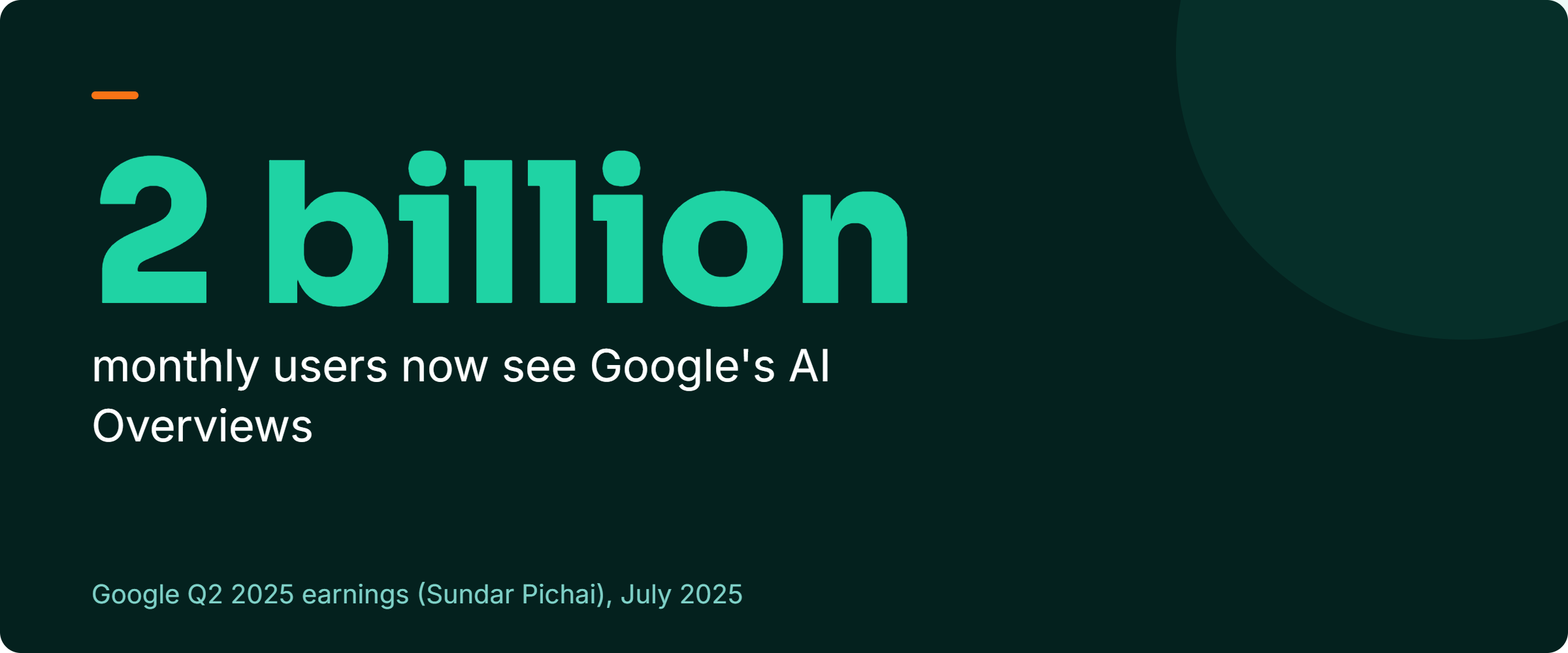
That is the shift, and it is already here. Google's AI Overviews crossed 2 billion monthly users in mid-2025. ChatGPT, Perplexity, and Gemini field a flood of "who should I hire" and "what should I buy" questions. The question for you is no longer just "do I rank on Google." It is "when the AI answers, does it name me, and does it say something true and good about me."
I have spent about 17 years in search and worked with more than 300 businesses across the US, UK, Canada, Singapore, Australia, and New Zealand. Over the last two years almost every owner I talk to is circling the same worry without the words for it: I am losing visibility and I cannot see where it is going. This guide gives you the words, the map, and the order to fix things in. It is long on purpose. Bookmark it and work through it.
A lot of people are about to oversell this to you. AI visibility is not one magic setting. It is a stack of separate problems that each need a different fix. The whole point of this page is to break that stack apart so you can see which layer is actually costing you customers, instead of throwing money at all of it at once.
What AI search visibility actually is
Let me define the terms once, in plain language, so that the rest of this makes sense.
AI search visibility is whether AI-powered answers mention you, cite you as a source, and recommend you when someone asks about what you sell. It has a few common names. AEO stands for Answer Engine Optimization, which is making your business the answer an AI gives. GEO stands for Generative Engine Optimization, which is the same idea aimed at generative tools like ChatGPT and Gemini. They describe the same job from slightly different angles.
You will run into a few surfaces. AI Overviews are the AI summaries that appear at the very top of a Google results page. AI Mode is Google's full conversational search, where the whole experience is a chat instead of a list of links. And then there are the standalone assistants, ChatGPT, Perplexity, Gemini, where people ask for a recommendation directly and never touch Google at all.
The scale is the part owners underestimate. This is not a niche of early adopters anymore.
If you want the deeper version of how this differs from classic SEO, I go under the hood in what actually changed between AEO and SEO in 2026. It includes the evidence that getting cited by AI is SEO done more precisely. The short version is that the fundamentals did not get thrown out. They got stricter.
How AI search decides who to cite
One mechanic trips up most owners. When someone asks an AI a question, the AI does not run one search the way you would. It quietly breaks the question into a handful of smaller searches, runs them all in the background, gathers sources from each, and then writes one answer from the pile. That breaking-apart is called query fan-out.
This is why "I rank number one for my main keyword" no longer protects you. The AI might fan that one question into eight sub-questions, and you only show up strongly for one of them. I walked through this in detail in one question, many searches, and I broke the full pipeline into its stages in AI search has five stages and your strategy probably covers one.
The takeaway is uncomfortable but useful. To get cited, you have to be a good answer to the whole spread of related questions around your topic, not just the one phrase you have always chased.
The content AI actually cites, and what it ignores
The content you are proudest of is often the content AI skips. The glossy brand page, the clever campaign, the "we are passionate about excellence" copy, AI has no use for it. It cannot extract a clear, quotable, factual answer from a mood.
There are two separate decisions here, and owners blur them together. The first is which kind of page to publish at all. Listicles, comparisons, and product pages get pulled into AI answers far more than the polished essay you are proud of. I lay out the citation-rate data by format in which content formats AI actually cites. The second decision comes after you have picked the format: how to structure that page so a machine can lift a clean passage out of it. Use descriptive headings, front-loaded answers, and standalone factual sentences, as I walk through in how to format a page so AI can quote it. One is what to publish. The other is how to build it. You need both.
There is a strategy layer on top of the formatting. If your content looks like everyone else's content, the AI has no reason to pick you out of the pile. You have to build something less interchangeable, which I argue in non-commodity content. And if you have been told the answer is just to "make great content," read why that is dead advice and what works now before you spend another dollar on it.
Brand, trust, and authority turn a mention into a recommendation
Here is a distinction that will save you a lot of wasted effort. Being mentioned by an AI and being recommended by an AI are two different things, and so is being believed.
An AI can name you in a list of ten and still steer the customer to a competitor it trusts more. A citation is a footnote, not a vote of confidence. I pulled these apart in being mentioned by AI is not the same as being believed and in a citation is not a recommendation. The thing that tips an AI from "mentions you" to "recommends you" is the same thing that tips a human: a brand it keeps seeing other trusted sources talk about. I keep telling owners that brand is the new backlink.
And before you try to win this by out-publishing the internet, know your limits. You are usually not going to outrank Reddit and the big forums for broad questions, and you do not need to. You need to be the trusted, specific answer for the questions that actually bring you customers.
Your owned assets, from homepage to AI agents
Some of this stack you control completely, and most owners are leaving it on the floor.
Your homepage is no longer just a brochure for humans. It is one of the first things an AI reads to decide what you are and whether to trust you. I explain the shift in your homepage is now an AI landing page. The technical readability of your site matters too, because AI agents and crawlers have to be able to move through it cleanly, which I cover in make your site ready for AI agents.
There is also a trap door here. There are toggles and opt-out settings floating around that promise to control how AI uses your content. Do not flip the ones you cannot measure yet, and read what Google's AI opt-out actually removes before you touch one. Pulling a lever blind is how owners accidentally make themselves invisible.
Diagnosing why your AI visibility is not working
This is the section most of you came for. When an owner tells me "my AI visibility is broken," they almost never have one problem. They have several stacked on top of each other, and they are trying to fix the wrong one first.
For hands-on troubleshooting, I wrote practical walkthroughs on why your AI Overview is not showing your business and how to check whether AI actually recommends you.
I made this case in you do not have an AI visibility problem, you have five of them. The work fails to move the needle when you pour effort into a layer that was not the bottleneck. I describe that trap in why your AI visibility work is not moving the needle and which layer to fix first. And once you do start showing up, you have to accept that it moves. Your position in AI answers can swing hard every time a model updates, because your AI visibility has no floor.
Picture your own business for a second. Say you run a three-location physiotherapy clinic. You ask ChatGPT "best physio for sciatica in your city" and you are not named. The instinct is to panic and rewrite every page. But the real cause might be simpler. Maybe you have no clear, factual, structured page about sciatica treatment for the AI to pull from, while a competitor does. That is one layer, one fix. Diagnose before you renovate.
This is fixable. Years ago I got a London ADHD clinic booked solid for three straight months, to the point that demand forced them to hire more specialists and outsource the overflow. That was patient, layered visibility work, done in the right order. There was no single switch. There was a stack, fixed one layer at a time.
Client case study
The Clinic That Ran Out of Slots
How patient, layered visibility work booked a London ADHD clinic solid for three straight months.
- The starting point and the layered approach
- What happened when demand outran capacity
- What it means for your own calendar
Measuring AI visibility without fooling yourself
You cannot manage what you measure badly, and AI visibility is very easy to measure badly. My free AI visibility checker gives you a first read in two minutes by scoring the nine signals the engines look for. Measuring the answers themselves takes more care.
Asking ChatGPT about yourself once tells you very little. The answer changes from one session to the next. What you need is a hit rate across many tries, which I explain in why one answer from ChatGPT proves so little.
The bigger measurement trap is attribution. AI influences customers who later show up through some other channel and your analytics hands the credit to the wrong place. I unpack that in the attribution gap in the AI era, along with why a falling Google traffic line is the wrong grade for your content. Even Google's own reporting hides part of the picture. Its new AI report shows impressions and no clicks, which I get into in what the AI impressions report leaves out.
The buyer journey has moved earlier
Tie it all back to money, because this is where it hits your bank account. The decision is moving to before the click.
When an AI summary is on the page, people click a normal search result far less often. They are getting what they need from the answer and deciding right there. That means a growing share of your buyers are deciding before they ever reach your website. If the AI's answer did not include you, or included you weakly, you lost the customer in a room you were not even standing in.
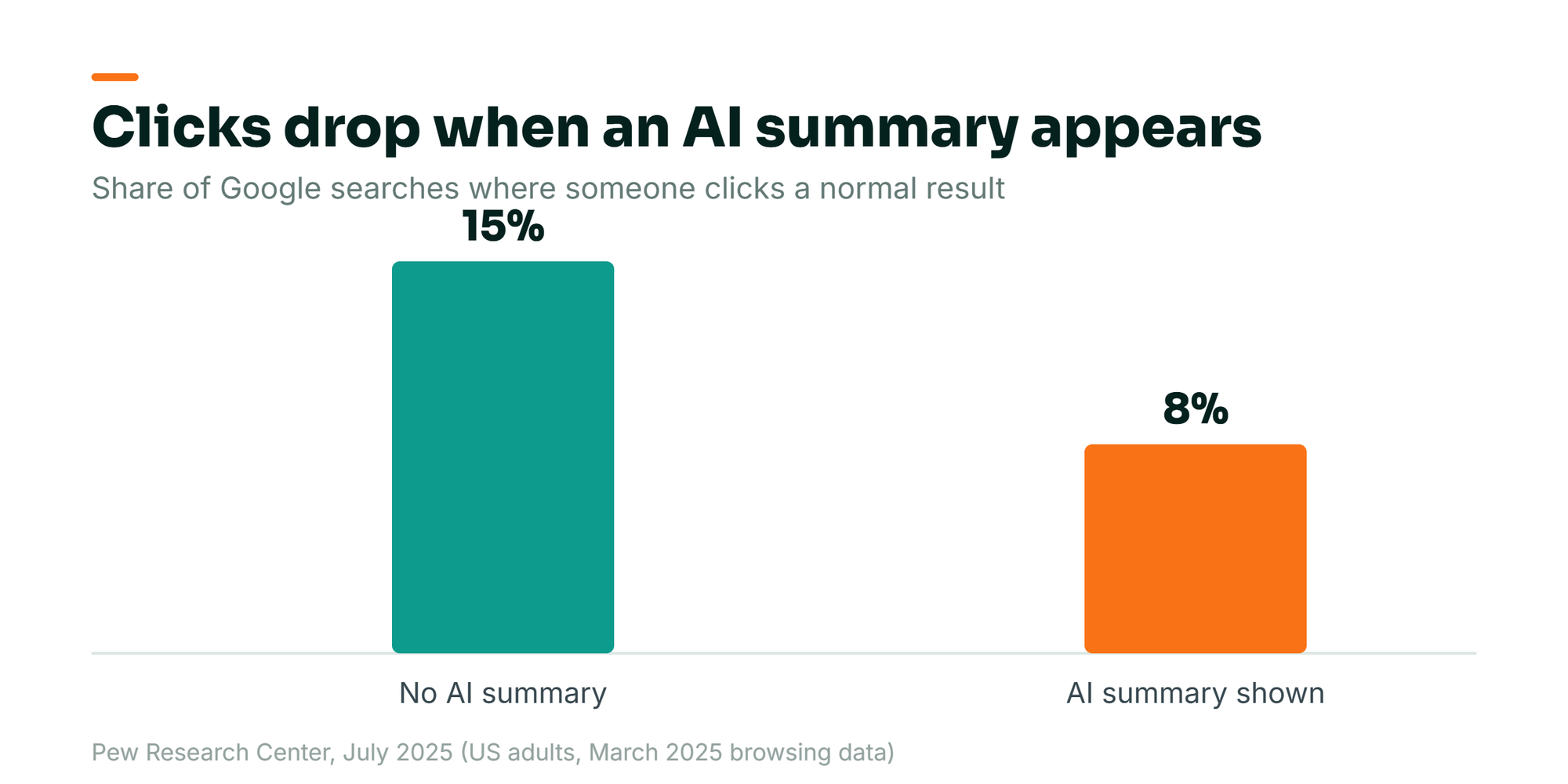
This is also why I keep telling people to calm down about raw click loss. The falling-click headlines are real, but the zero-click panic is mostly a publisher problem, and you are not a publisher. You do not need the click. You need the recommendation that leads to the booking. Different game, different scoreboard.
How to improve brand visibility in AI answer engines
Brand visibility in AI answer engines is how often ChatGPT, Gemini, Perplexity and Google's AI Overviews name your business when someone asks a question in your category. It also covers whether they describe you accurately when they do. It moves on the same evidence the rest of this guide describes. A name that means one business everywhere, a third-party record of reviews and mentions the engines can verify, and pages that state facts an engine can quote.
The order I use with clients puts the trust work ahead of the formatting. An engine that cannot tell which business you are will not name you. If the diagnosis section above already showed you the broken layer, start there. If it did not, work through the list below in order.
Before step 1, open yoursite.com/robots.txt and confirm it lets in OAI-SearchBot, Claude-SearchBot and PerplexityBot. The table in why ChatGPT can't read the parts of your site that sell shows which bot from each company fetches live answers and which gathers training data.
- Make your name and profile mean one business. Your name, address, phone and description should read the same on every profile and directory an engine checks. On your Google Business Profile, BrightLocal's advice is to choose the most specific primary category on offer ("Personal Injury Attorney," not "Lawyer"), fill in every field and add real photos.
- Earn a third-party record. Reviews, directory listings and press mentions are the evidence an engine checks your own claims against. This step is slow and it compounds. Start it the same month as step 1.
- Publish facts an engine can check. State your prices or price ranges, service areas, hours and who does the work on your own pages, in plain sentences.
- Format the pages that answer real customer questions. Put the answer in the first two sentences of each section and let every section make sense on its own.
- Check the answers every month. Run the same buying questions through ChatGPT, Gemini, Perplexity and Google's AI Overviews. Track how often you are named and who gets named in your place.
A tracker run I did in July shows why the trust work goes first. A real estate client with the right pages was named in 0 of 30 Claude answers. Three regional brokerages with a deeper record of reviews, listings and local press were named every time. The full run and the order of work are in my answer engine optimization guide.
Where to start
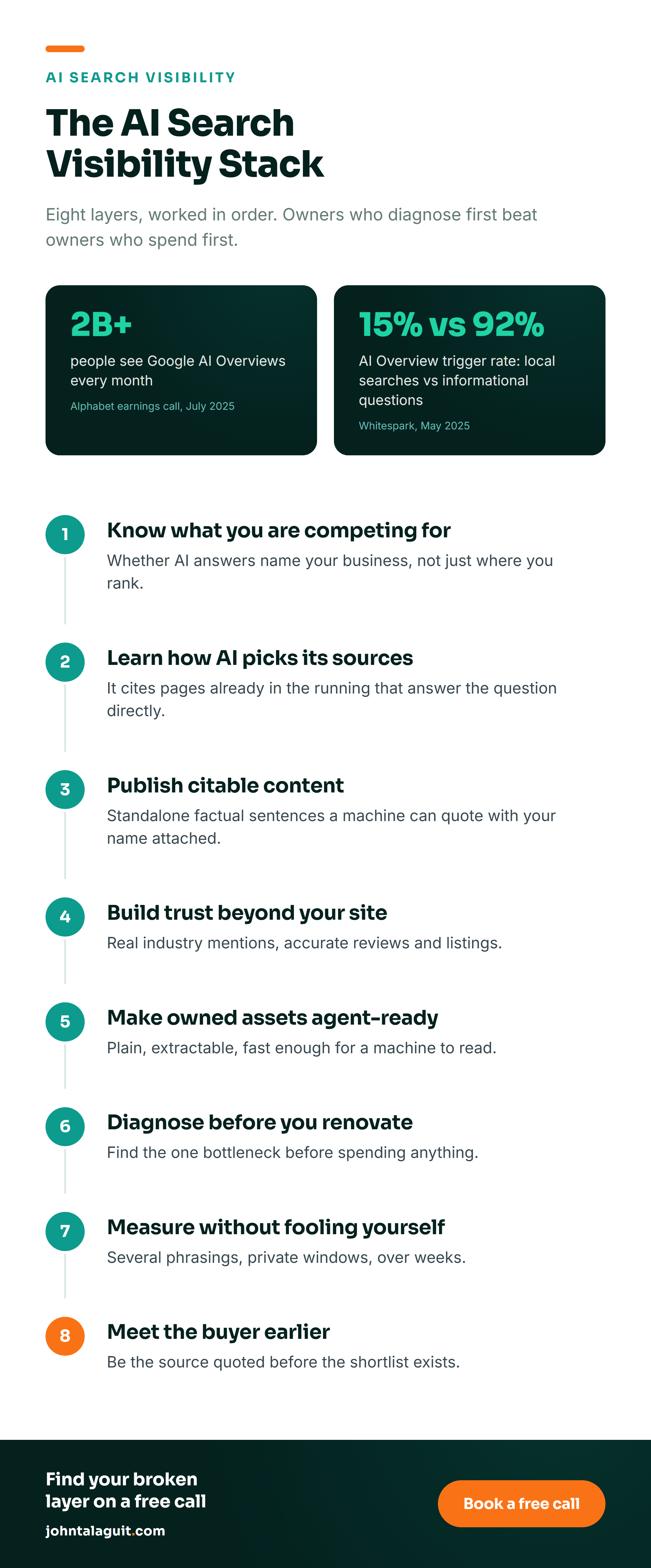
If you skip everything else, start here. Do not try to fix all eight layers this month. Diagnose which one is actually costing you customers, fix that, measure it properly, then move to the next. AI visibility rewards the owner who works in order, not the one who works the hardest.
Free download
The AI Search Visibility Checklist
The eight layers of this guide as a printable checklist you can work through one layer at a time.
- All eight layers as run-them-in-order checks
- Two concrete actions per layer
- The 2 billion reach and 15% vs 92% trigger numbers
If you are not sure which layer is your real bottleneck, that is the conversation I have with owners every week. You can book a free AI visibility call and we will look at where you actually stand and what to fix first. If you want the measuring done for you, the $150 AI visibility audit puts your ten customer questions to four AI engines, three times each, and lists every business named instead of you.
Frequently Asked Questions
What is AI search visibility, and is it different from SEO?
AI search visibility is whether AI answers, like Google's AI Overviews, ChatGPT, Perplexity, and Gemini, mention, cite, and recommend your business when someone asks about what you sell. It is related to SEO but stricter. Classic SEO got you ranked in a list of links. AI visibility is about being the clear, trustworthy, quotable answer the AI builds its response from, across the whole spread of related questions, not just one keyword.
How do I know if AI is recommending my business?
Do not judge it from a single question. AI answers change from one session to the next. One screenshot, good or bad, tells you very little. Ask the same buying questions many times across the main tools and track how often you get named, what it says about you, and whether it recommends you or just lists you. That hit rate over many tries is the real signal, and it is the honest starting point before you change anything.
How long does it take to improve AI visibility?
It depends on which layer is broken and how much authority you already have. Anyone promising a fixed number is guessing. Some fixes, like a missing factual page on a service you offer, can show up in AI answers within weeks. Building enough brand trust for an AI to recommend you, and not just mention you, takes months. The faster path is almost always diagnosing the one layer that is actually holding you back and fixing that first, instead of spreading effort thin across all of them.